Motor Oil Basics: What Every Car Owner Should Know
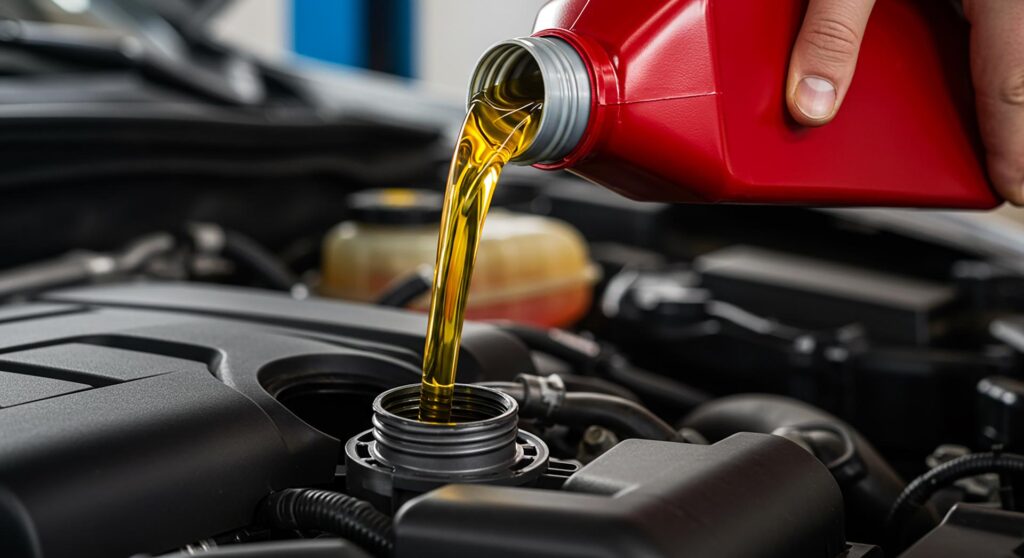
Motor oil is one of the most important fluids in your vehicle. Although it may seem like a simple maintenance item, choosing the right motor oil and changing it at the proper time can make a significant difference in your engine’s performance, efficiency, and lifespan.
Whether you drive a daily commuter, a family SUV, or a high-performance vehicle, understanding the basics of motor oil can help you protect your engine and avoid unnecessary repair costs.
In this guide, we’ll cover everything you need to know about motor oil, from its main functions to choosing the right type and maintaining it properly.
1. What Does Motor Oil Actually Do?
Motor oil does much more than simply lubricate your engine. It performs several essential functions:
- Reduces friction: Creates a protective film between moving engine components, helping minimize friction and wear.
- Controls engine temperature: Helps carry heat away from critical engine parts.
- Cleans the engine: Helps suspend dirt, sludge, and other contaminants so they can be captured by the oil filter.
- Prevents corrosion: Helps protect internal metal surfaces against rust and corrosion.
- Improves engine performance: Proper lubrication helps engine components operate smoothly and efficiently.
Without proper lubrication, engine components can experience excessive wear and potentially serious damage.
2. Understanding Motor Oil Viscosity
One of the first things you’ll notice when buying motor oil is a number such as 5W-30, 0W-20, or 10W-40.
These numbers represent the oil’s viscosity, or its resistance to flowing at different temperatures.
For example, in 5W-30:
- 5W describes the oil’s low-temperature performance. The “W” stands for winter.
- 30 indicates the oil’s viscosity at normal operating temperature.
In general, lower winter-grade numbers indicate better cold-temperature flow characteristics. However, the correct viscosity depends on your engine’s design and manufacturer specifications.
Always check your vehicle owner’s manual before selecting an oil grade.
3. Different Types of Motor Oil
Not all motor oils are the same. The most common types include:
Conventional Motor Oil
Conventional oil is a traditional petroleum-based lubricant. It can be suitable for certain engines when it meets the manufacturer’s specifications.
Synthetic Motor Oil
Synthetic oil is engineered to provide consistent performance across a wide range of operating temperatures. It generally offers excellent oxidation resistance and can provide enhanced protection under demanding conditions.
Synthetic Blend Motor Oil
Synthetic blend oil combines conventional and synthetic base oils. It offers a balance of performance and cost, depending on the formulation.
High-Mileage Motor Oil
High-mileage oils are formulated for vehicles with higher mileage. Some formulations include additives designed to help condition seals and reduce oil consumption associated with aging engines.
Important: The best oil is not necessarily the most expensive one. It is the oil that meets your vehicle manufacturer’s required viscosity and performance specifications.
4. When Should You Change Your Motor Oil?
Regular oil changes are essential for maintaining engine health.
Over time, motor oil can lose some of its effectiveness as it becomes contaminated with combustion byproducts, dirt, and other particles.
However, there is no single oil change interval that applies to every vehicle.
Your recommended oil change schedule depends on factors such as:
- Vehicle make, model, and engine design
- Type and specification of motor oil
- Driving habits and mileage
- Operating temperatures and climate
- Stop-and-go traffic, towing, and other severe driving conditions
Many modern vehicles have an oil-life monitoring system that helps determine when service is needed.
Always follow the maintenance schedule in your owner’s manual rather than relying on a universal mileage or time recommendation.
5. How to Check Your Engine Oil Level
Checking your engine oil regularly is a simple way to help prevent engine problems.
For vehicles equipped with a traditional dipstick, follow these steps:
- Park your vehicle on level ground.
- Turn off the engine and allow the oil to settle. Follow the manufacturer’s instructions for checking the oil when warm or cold.
- Locate the engine oil dipstick.
- Pull it out and wipe it clean with a lint-free cloth.
- Insert it fully, then remove it again.
- Check that the oil level is between the minimum and maximum marks.
- Add the recommended oil if necessary, a little at a time, and recheck the level.
Some newer vehicles use electronic oil-level monitoring instead of a traditional dipstick. Follow the instructions in your owner’s manual.
Never overfill the engine, as excessive oil can also cause damage.
6. Signs That Your Engine Oil Needs Attention
Your vehicle may show several warning signs when its oil level or condition needs attention:
- Oil pressure warning light: Stop safely and follow your vehicle’s instructions. If the oil pressure warning remains on, shut off the engine and investigate before driving again.
- Unusual engine noise: Knocking, ticking, or other unusual sounds may indicate a lubrication problem.
- Low oil level: Frequent low readings may indicate oil consumption or a leak.
- Visible oil leaks: Oil spots underneath your parked vehicle should be investigated.
- Unusual oil condition: Milky or foamy oil can indicate contamination and should be checked by a professional.
Do not ignore oil pressure warnings. Continuing to drive with insufficient oil pressure can cause severe engine damage.
7. Common Motor Oil Mistakes to Avoid
Even experienced drivers sometimes make mistakes when maintaining their engine oil.
Here are a few things to avoid:
- Using an oil viscosity that does not meet manufacturer requirements.
- Ignoring recommended oil change intervals.
- Mixing oils without checking compatibility and specifications.
- Overfilling or underfilling the engine.
- Reusing an old oil filter when a new one is required.
- Ignoring oil leaks or dashboard warning lights.
Using the correct oil and following a consistent maintenance routine can help prevent many avoidable problems.